US Representative John Lewis Steps Up for GLBT Rights

Many thanks to Pam Spaulding for capturing John Lewis’ speech at Equality Alabama’s gala a couple of weekends ago. John Lewis is an American hero and a powerful speaker; it is fantastic to hear him speaking so strongly on this issue and declaring himself an ally to the GLBT community.

John Lewis took batons to the head, was beaten to unconsciousness multiple times for equality — courage and moral conviction that [Bishop Harry] Jackson and his fellow charlatans of bigotry are bereft of.

Rep. Lewis spoke eloquently about the simplicity of the government staying out of the lives of gay and lesbian couples — there is no need to “save” marriage from two people who simply want to love one another and be legally affirmed in the same way that heterosexual couples are when they marry.

But perhaps the most powerful message was to those in the LGBT community who are waiting for equality to come to them — Lewis charged us to seize the moment, do not accept being told to wait your turn, to demand your rights through your representative, and most of all take personal responsibility — the message we all heard was loud and clear.

(Read the rest of Pam’s post on Lewis’ appearance at the Equality Alabama gala.)

§ Posted by Benjamin T. Greenberg on September 24, 2009 at 12:13 am

§ Filed under Weblogs, civil rights, civil rights movement, glbt, human rights, race and racism, video, women and feminism and tagged , , , , ,

Comments

It’s Official: Jerry Mitchell is a (MacArthur) Genius

Congratulations to Jerry Mitchell!

DSCN9496.jpg

Jerry Mitchell at the Crimes of the Civil Rights Era conference, Northeastern University Law School, April 28, 2007

A papermaker dedicated to preserving traditional Western and Japanese techniques; a scientist developing theories of global climate change; and a journalist who helps uncover details of unsolved murders from the civil rights era are among the 24 recipients of the $500,000 “genius awards,” to be announced on Tuesday by the John D. and Catherine T. MacArthur Foundation….

Jerry Mitchell, an investigative reporter at The Clarion-Ledger newspaper in Jackson, Miss., who focuses on cold-case murders from the civil rights era, said he would use the money to help write a book on the subject. “I never in all my life expected this,” Mr. Mitchell, 50, said of his award.

I have been following Jerry’s work almost as long as I’ve had this blog and more recently have had the honor and pleasure of getting to know him professionally. Here’s a bit more about him for those unfamiliar:

He has been called “a loose cannon,” “a pain in the ass” and “a white traitor.” Whatever he’s been called, Jerry Mitchell has never given up in his quest to bring unpunished killers to justice, prompting one colleague to call him “the South’s Simon Wiesenthal.”

Since 1989, the 47-year-old investigative reporter for The Clarion-Ledger in Jackson, Miss., has unearthed documents, cajoled suspects and witnesses, and quietly pursued evidence in the nation’s notorious killings from the civil rights era.

His work so far has helped put four Klansmen behind bars: Byron De La Beckwith for the 1963 assassination of NAACP leader Medgar Evers, Imperial Wizard Sam Bowers for ordering the fatal firebombing of NAACP leader Vernon Dahmer in 1966, Bobby Cherry for the 1963 bombing of a Birmingham church that killed four girls and, most recently, Edgar Ray Killen, for helping orchestrate the June 21, 1964, killings of Michael Schwerner, James Chaney and Andrew Goodman.

So far in 2006, Mitchell has been named a Pulitzer Prize finalist, the winner of the George Polk Award for Justice Reporting, the winner of the Vernon Jarrett Award for Investigative Reporting and the Tom Renner Award for Crime Reporting from Investigative Reporters and Editors. Last November, Mitchell became youngest recipient ever of Columbia University’s John Chancellor Award for Excellence in Journalism for his 17 years of pursuing justice.

David Halberstam said in helping bestow the Chancellor award, “Mitchell pursued these stories after most people believed they belonged to history, and not to journalism. But they did belong to journalism, because the truth had never been told and justice had never been done.”

In 1989, Mitchell was a court reporter for The Clarion-Ledger when the film Mississippi Burning inspired him to look into old civil rights cases that many thought had long since turned cold. Through dogged reporting, which cut across the grain of his paper and many of its readers, he investigated leads long ignored or overlooked.

For example, Mitchell’s diligent attention to detail unraveled the alibi of Cherry, who claimed he was watching wrestling on television when the bomb was planted inside the Birmingham church. Mitchell had the newspaper’s librarian check the TV schedule in the old issues of the Birmingham News. There was no wrestling program on at the time.

His work inspired others. Since 1989, authorities in Mississippi and six other states have reexamined 29 killings from the civil rights era and made 27 arrests, leading to 22 convictions.

“It is fair to say that without Mitchell’s dogged and often courageous reporting … many murders from the civil rights era would have remained unvindicated, locked forever in the vaults of regional amnesia,” wrote Tribune syndicated columnist Kathleen Parker.

(Read more.)

§ Posted by Benjamin T. Greenberg on September 21, 2009 at 11:49 pm

§ Filed under breaking news, civil rights movement, mississippi, neshoba murders, race and racism and tagged , , , , , , , , , , , , , , , ,

Comments

If I Had My Way

You can’t grow up in in the home of a political radical from the 1950s and 60s without hearing Peter, Paul and Mary. I’m very sad to hear of the death of Mary Travis. She raised the roof for freedom and justice her whole career. If there’s a heavenly place where great spirits celebrate together Mary is surely whooping it up with them now.

§ Posted by Benjamin T. Greenberg on September 17, 2009 at 12:24 am

§ Filed under Music, Paul Greenberg 101, breaking news, civil rights movement, family, human rights, hungry blues, video, women and feminism and tagged , , , , ,

Comments

We Can’t Afford to Wait (MoveOn & R.E.M)

Have you called Congress to say you support health care reform that includes a public option?

Even if you have, call again.

202-224-3121

§ Posted by Benjamin T. Greenberg on September 13, 2009 at 5:28 pm

§ Filed under economic policy, health, human rights, politics, take action, video and tagged , , , , ,

Comments

4 Years After Hurricane Katrina

DSCN1170

Grand Casino, Biloxi, MS, five months after Hurricane Katrina made landfall in Mississippi.

On August 29, 2005, the eye of Hurricane Katrina made landfall in Waveland, Mississippi, and the western side of the storm grazed New Orleans. Five months after the storm, I visited the Mississippi Gulf Coast.

According to a National Hurricane Center report on Katrina, “in many locations, most of the buildings along the coast were completely destroyed, leaving few structures within which to identify still-water marks.” The center’s researchers estimate that the hurricane produced a storm surge as high as 27 feet in some locations.

It was dumbfounding to drive along the coast in Biloxi and find the Grand Casino on the north side of Highway 90. Before Katrina, the casino was on a barge, docked off the beach, south of the highway. The storm surge lifted the casino barge out of the water, over the beach and over the highway. If you stand at the western end of the barge and look east, you can see the yellow and blue neon sign, a half mile down the road, where the barge originally sat. The same thing happened to two other casino barges—the President Casino in Biloxi, which landed on top of a Holiday Inn, and the Gulfport Grand Casino….

The national media have covered the near-total destruction of Bay St. Louis and Waveland. Driving along Beach Boulevard in the two towns, I saw a few people who had returned and were living in trailers on their plots of land, but practically everything was deserted. All that remained were the merest remnants of homes and the things that had been inside them….

In each place I visited along the western half of Mississippi’s Gulf Coast, the look of the destruction was a little different, but it was consistently total. And surprisingly, the destruction in the coastal areas of Pascagoula, at the eastern end of the state, is comparable. I remembered George W. Bush’s promise to rebuild another “fantastic house” for Trent Lott on the Pascagoula beachfront. I did not know that 95% of the city’s residential areas went underwater or that 65% of the city’s homes remain uninhabitable. Northrop Grumman Ship Systems’ facility in Pascagoula, which before Katrina employed 19,800 people, was all but obliterated.

Hurricane Katrina wiped out the entire Gulf Coast of Mississippi. The scale of the destruction is difficult to comprehend. All along the coast—mile after mile—just about anything that was there is now gone.

But this is only part of the story. According to the National Hurricane Center, the surge “penetrated at least six miles inland in many portions of coastal Mississippi and up to 12 miles inland along bays and rivers. The surge crossed Interstate 10 in many locations.” Interstate 10 runs east-west, four miles or more north of coastal Highway 90.

Gayle Tart’s brother Sam and his son John died in Pass Christian during the hurricane, on John’s second birthday. Tart explained that father and son had drowned inside their own home.

“Water never came down there [before Katrina]. That’s across the track. [With Katrina] that water came in and that water went out, and the velocity was unbelievable,” Tart said. “The first boundary was the beach and the next boundary was the highway. The day after the storm, you saw neither—no beach and no highway.”

When I wrote this for Dollars & Sense Magazine in 2006, I focused on the housing crisis faced by Katrina survivors in Mississippi. Today, at the fourth anniversary of the storm, the housing crisis rages on, thanks to government inaction and skewed priorites.

Small rental and workforce housing progress has fallen dramatically short of State predictions, and so Mississippi has asked HUD for additional funds to temporarily subsidize lower-income residents in market rate rentals….

  • Mississippi has allocated just over half its funds on housing, and has lowered its commitment to housing by over $800 million in the past 2 years. Louisiana has allocated over 85 percent to housing programs and increased its commitment over the same period.
  • Mississippi has spent just under half its funds, while Louisiana has spent almost 68 percent of its funds, widening its lead over Mississippi.
  • Mississippi diverted $600 million from its housing program to a port expansion, while Louisiana intends to reinvest $600 million in unused Road Home funds for housing assistance for low-income residents.
  • Mississippi took longer to spend less later for low-income residents than for wealthier residents.

But the housing crisis was just one part of the ongoing disaster. Katrina has also been a cultural and ecological disaster of epic proportions.

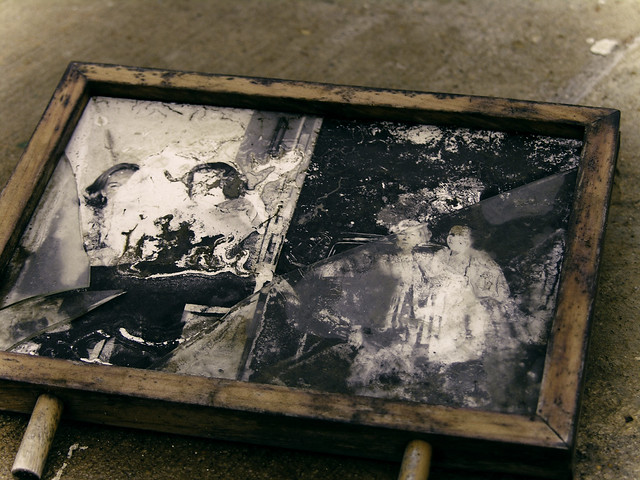
DSCN0714

A family photo rests on the foundation slab of a home obliterated by Hurricane Katrina in Bay St. Louis, Mississippi.

I emphasize Mississippi in this blog post because I know that nearly all of the fourth anniversary coverage of the ongoing Katrina aftermath, will focus myopically on New Orleans. The situation in New Orleans is still dire. The housing crisis is dire. But there will not be an adequate recovery until the interconnectedness of regions and issues becomes a fundamental insight that drives policy.

While poor and minority survivors and activists will agree (if anyone asks them) that they face multiple, interconnected disasters in the aftermath of Katrina and Rita, this basic local insight goes largely unrecognized. Government failure is certainly most responsible for a “recovery” that has been arbitrary, resource-driven, and slow rather than holistic, need-driven, or effective. But no one, progressives as a group included, has adequately depicted, let alone offset, that failure. Narrowly focused aid has often segregated otherwise related issues, making one or another worse and masking the lack of an overall plan. Residents of the region feel tremendous gratitude to the tens—if not hundreds—of thousands of volunteers whose countless hours of labor, along with their financial contributions, are primarily responsible for what rebuilding has occurred. However, this individual good will is no substitute for the kind of comprehensive, coordinated, and sustained response that is needed from government at all levels.

Unfortunately, no thoughtful and coordinated response will occur without a compelling grassroots push for community visibility, multi-issue awareness, and broad social justice for Gulf Coast survivors. Our region today remains in a cultural, environmental, economic, and human rights crisis no less severe than its more frequently discussed housing crunch and extending far beyond the parishes of its famed city, New Orleans. The media, policymakers, academicians, and private funding groups repeatedly fail to recognize regional connectivity or to challenge the basic invisibility of the Gulf Coast’s multiply wounded communities and ecosystems—together, its very soul. [P]iecemeal analyses and responses … are moving social justice and equitable recovery nowhere fast.

The Gulf Coast Civic Works Act, still needing co-sponsors in the House, is a step in the right direction:

a hybrid model to partner directly with communities in planning, overseeing and administering recovery projects to assist the survivors of these disasters, provide communities with tools to build resilience against the impact of future disasters and revitalize the region economically.  The bill would create a minimum of 100,000 prevailing wage jobs and training opportunities for local and displaced workers on projects reinvesting in infrastructure and restoring the coastal environment utilizing emerging green building techniques and technologies.  This program would empower residents to realize their right to return with dignity and create stronger, safer, and more equitable communities.

Ask your Representative to co-sponsor this important legislation.

DSCN0863.JPG

Carland Baker, Sr. on the site of his former townhouse, Longwood Apartments, 2012 2nd St, Long Beach, MS.

More reading and resources

§ Posted by Benjamin T. Greenberg on August 30, 2009 at 7:37 am

§ Filed under MS Gulf Coast, class and poverty, economic policy, environmental justice, human rights, katrina, mississippi, nola, race and racism and tagged , , , , , , , , , , , , , , ,

Comments

Fatherhood (from The Waiting Room)

This video is from a film by my friend Pete Nicks, who is the guy with the camera in my banner image, above. The film, The Waiting Room, is a timely documentary about our health care system, as seen at The Alameda County Medical Center in Oakland, CA.

THE WAITING ROOM will follow three people waiting in their own way: Wright Lassiter, the hospital’s CEO, who is struggling to run an under-funded public hospital while waiting for the health care system to change, Lydia Vasquez, a young uninsured woman waiting for the birth of her first child, and Kevin Washington, a young uninsured man who has slipped through the cracks, waiting for a miracle after being diagnosed with a terminal illness. These narratives will be punctuated by content interstitials culled from the social media space, both user-generated and produced: videos submitted online, blog posts cinematically dramatized, conversations between patients and policy makers in Washington, DC, photos and stories from the front lines of the hospital waiting room.

It’s not just a film; it’s a project. Read the rest to find out more about it.

§ Posted by Benjamin T. Greenberg on August 24, 2009 at 2:31 am

§ Filed under economic policy, film, friends, human rights, video and tagged , , , , , ,

Comments

Real World Labor

FOR IMMEDIATE RELEASE

August 18, 2009
Contact: Linda Pinkow, (617) 447-2177, ext 204, linda@dollarsandsense.org

New Anthology Explores the State of Labor

Real World Labor
Edited by Immanuel Ness, Amy Offner, Chris Sturr, and the Dollars & Sense Collective

rwl_cover_largeIn this time of rapid economic change, the power of organized labor seems to be in decline. But new organizing strategies are emerging to challenge corporate power and the globalization of capital. Real World Labor examines the most pressing issues facing workers today: fundamental changes in the nature of work and wages; new legal impediments to union organizing; the persistence of racial and gender discrimination; migrant workers’ struggle for dignity; militarism and its harmful effects on the working class; union responses to the global financial meltdown; and new forms of rank-and-file organizing and resistance.

Real World Labor provides up-to-date, accessible, and penetrating analysis of the most significant theoretical, historical, and practical issues confronting labor unions and workers on a national and global level. This collection includes 70 authoritative essays by leading writers and scholars of the labor movement, drawn from the pages of Dollars & Sense magazine, Working USA, and Labor Notes.

Real World Labor is an antidote to the misinformation, false arguments, and faulty analysis so common in the mainstream media and among orthodox economists. An excellent classroom resource.

— MICHAEL YATES
associate editor of Monthly Review,
author of Why Unions Matter

For any labor studies course, Real World Labor is the most comprehensive and accessible book available today. Written by authoritative scholars of the labor movement in the United States and worldwide, no book compares to this work in its breadth of coverage and scope of analysis. This is the only collection that provides an in-depth overview of labor issues in an accessible manner to anyone interested in understanding the most significant issues facing workers and the contemporary labor movement. I highly recommend this book to all!

— THOMAS J. KRIGER
Provost, National Labor College

Real World Labor, like decades of Dollars & Sense books, is bound to be a great guide to labor issues, with a wide range of perspectives for both union members and students.

— LARRY COHEN
President, Communications Workers of America

Order an exam copy (pdf’s as well as hard copies are available), and browse our catalog of economics books at www.dollarsandsense.org, or call (617) 447-2177.

Real World Labor
Edited by Immanuel Ness, Amy Offner, Chris Sturr, and the Dollars & Sense Collective

ISBN: 978-1-878585-55-4
Publication date: August 2009
Pages: 330
Price: $34.95
Contributors include: David Bacon, Kim Bobo, Heather Bouchey, Roger Bybee, Aviva Chomsky, Steve Early, Bill Fletcher Jr., Staughton Lynd, Arthur MacEwan, John Miller, Immanuel Ness, Thomas Palley, Frances Fox Piven, Robert Pollin, Paddy Quick, Peter Rachleff, Alejandro Reuss, Jane Slaughter, Lucien Van Der Walt, and others.

Contents:
Chapter 1 – Labor Law, Policy, and Regulation
Chapter 2 – Wages and the Labor Market
Chapter 3 – Employment and Unemployment
Chapter 4 – International Labor Movements
Chapter 5 – Discrimination by Race and Gender
Chapter 6 – Immigration and Migration
Chapter 7 – Unions and Organizing Strategy
Chapter 8 – Competing Forms of Management
Chapter 9 – Labor, Globalization, and Trade
Chapter 10 – Labor and Economic Crisis
Chapter 11 – Labor and Militarism

Read more about Real World Labor at www.dollarsandsense.org.

ds-logo-2009_stacked_box_tag_4c
29 Winter St.
Boston, MA 02108

§ Posted by Benjamin T. Greenberg on August 22, 2009 at 3:18 am

§ Filed under economic policy, labor movement and tagged , , , , , , , , , , , , , , , , , , , , , , , , , , , , ,

Comments

In Death Posey Dodges Murder Charges Once and for All

The Clarion Ledger reports:

Billy Wayne Posey, a key suspect in the Ku Klux Klan’s killings of three civil rights workers in 1964 in Mississippi, has died, but Justice Department officials say they’re continuing their investigation of the remaining suspects.

The 73-year-old Posey died Thursday of natural causes, according to friends. That leaves four living suspects in the June 21, 1964, killings of James Chaney, Andrew Goodman and Michael Schwerner in the Justice Department’s investigation….

Goodman’s brother, David, of New York City, said Friday that he hopes the Justice Department will continue to pursue the matter. “This is still the country of law and order, and the laws are clear,” he said. “There is no statute of limitations on murder.”

Time is passing by, he said, “but I never rejoice over a person’s passing. I’ve never felt any animosity toward the specific individuals who murdered my brother. They just pulled the trigger.”

In the summer of 1964, hundreds of FBI agents investigated the trio’s disappearance, leading to the grisly discovery of their bodies buried 15 feet beneath an earthen dam. In 1967, 18 men went on trial on federal conspiracy charges, and seven of them were convicted.

But the only murder prosecution took place in 2005 when a Neshoba County jury convicted reputed Klan leader Edgar Ray Killen on three counts of manslaughter. He is serving 60 years in prison.

Civil rights activists repeatedly have called for the prosecution of others besides Killen.

Posey came within one vote of being indicted by that same Neshoba County grand jury that indicted Killen, with a deciding vote against indictment cast by his relative. In a 2007 series, “Buried Secrets,” The Clarion-Ledger revealed three potential new witnesses against Posey.

In a 2000 statement, Posey told investigators there were “a lot of persons involved in the murders that did not go to jail.”

He did not name those people.

Posey admittedly was among those who pursued the trio that night, was there when they were killed and helped haul their bodies to the dam to bury them.

But the statement could never be used against Posey in state court because he was given immunity.

Then-Neshoba County Deputy Cecil Price told authorities prior to his 2001 death that he told Posey in 1964 he had just jailed the three civil rights workers and asked Posey to get in contact with Killen, who helped to orchestrate the killings.

In 1967, Posey was one of the seven men who was convicted of conspiracy to deprive Chaney, Goodman and Schwerner of their civil rights. Though his admission of taking part in the Chaney, Goodman and Schwerner murders could not be used as evidence, state and federal charges were still possible.

[W]hat Posey said wouldn’t be barred from federal court if federal authorities could pursue a case, said former state and federal prosecutor Patricia Bennett, a professor at Mississippi College School of Law. “And even if there was a state prosecution, authorities may be able to develop other evidence and not use that particular statement.”

Federal and state prosecutors still have the opportunity to pursue further justice in the murders of James Chaney, Andrew Goodman and Michael Schwerner.

Earlier this year, Chaney’s brother, Ben, met in Washington with Justice Department officials, asking them to pursue the case against the living suspects: Posey and Pete Harris, both of Meridian; Olen Burrage of Philadelphia; former Philadelphia police officer Richard Willis of Noxapater; and Jimmie Snowden of Hickory.

I spoke with Ben Chaney in 2007, two days after he buried his mother, Fannie Lee Chaney, next to her murdered son, James. Ben Chaney said:

My mother grew up in the time and period of Mississippi where it was believed that the death the murder of a black man by a white man would never be prosecuted. She had a great uncle lynched. When she was child she watched she saw a black male hanging from a tree who was lynched. When she was bout 5 or 6 years old she saw this. In her time of growing up it was just natural…. You could kill a black man if you were white and get away with it.

And unfortunately she took that to her grave….

This should have been over 40 years ago. Most definitely it should have been over with 1989, and without a doubt it should have been over in 2005. Everybody should have been prosecuted in 2005 and it hasn’t happened.

It hasn’t happened; it needs to happen; time is running out.

Listen to the complete 2007 Ben Chaney interview

 
icon for podpress  Standard Podcast [10:46m]: Play Now | Play in Popup | Download

§ Posted by Benjamin T. Greenberg on August 16, 2009 at 3:55 am

§ Filed under breaking news, civil rights movement, mississippi, neshoba murders, podcast, race and racism and tagged , , , , , , , , , , , , , , , , , , ,

Comments

Rocky Mt. Health Care Town Hall Meeting

Vimeo poster Ajamu Dillahunt writes:

Southern African American community resists corporate organized rightwing protestors. Above the shouts the community tells its story and why they need health care for all to overcome historic health disparities.

(h/t Jared Storey)

§ Posted by Benjamin T. Greenberg on August 13, 2009 at 11:47 pm

§ Filed under class and poverty, human rights, politics, race and racism, video and tagged , , , , , , , , ,

Comments

Lockdown and Protest at the West Virginia DEP

§ Posted by Benjamin T. Greenberg on August 12, 2009 at 1:19 am

§ Filed under breaking news, environmental justice, video and tagged , , ,

Comments

I Never Knew His Name

Though I did not know his name until today, Heinz Edelman has been one of my artistic heroes for decades. He was the illustrator and designer who made the visual landscape of the animated Beatles film Yellow Submarine. Heinz Edelman has died at age 75.

The movie’s mod-psychedelic look, which typifies the era’s spirited graphic art, emerged around the same time as the related psychedelic work of Terry Gilliam, Alan Aldridge and Victor Moscoso, but it has its own whimsical aesthetic. The bulbous Blue Meanies, which personify an evil mood as actual villains, pursue the innocent, well-coifed cartoon Beatles across an ever-shifting milieu of mysterious seas and holes that can be magically picked up and moved. The yellow submarine itself stops in an ocean of pulsating watches, representing time, to light a cigar for a friendly sea monster.

Notably, the designs prefigured contemporary music videos, especially in their use of dancing typography. Letters spelling out the lyrics “Love is all you need” morph into a strobing neon wallpaper pattern.

“He became famous because of his work on ‘Yellow Submarine,’ ” said the graphic designer Milton Glaser, a friend. “But that celebrity actually obscured his real talent and imagination.”

A highly successful advertising and editorial illustrator in Germany, England and the Netherlands, Mr. Edelmann was known for combining Impressionist and Expressionist sensibilities leavened with wit, humor and irony. He developed a distinct graphic style that influenced many artists in Europe and the United States. He was given a Masters Series exhibition at the School of Visual Arts in New York in 2005.

In the 1960s he was experimenting with a stylized, soothingly fluid, neo-Art Nouveau manner. That caught the eye of Al Brodax, producer of a successful animated Beatles television cartoon series for children. He chose Mr. Edelmann to be the chief designer of his first feature-length animated film, “Yellow Submarine,” built around a 1966 song of the same name, credited to John Lennon and Paul McCartney, with lead vocals by Ringo Starr.

It was not easy to get initial approval for “Yellow Submarine.” The Beatles were unenthusiastic about Mr. Brodax’s more conventional-looking cartoon series (not done by Mr. Edelmann), Newsweek reported in 1968; their manager, Brian Epstein, was a stumbling block as well.

The tide turned, Newsweek said, during a stroll through the Tate Gallery in London, where Mr. Brodax and Mr. Epstein happened upon J. M. W. Turner’s “Peace — Burial at Sea” and marveled at that painting’s intense colors.

“Wouldn’t it be great if we could get those colors to move?” Mr. Brodax asked.

Mr. Epstein replied, “We would need great art.”

Mr. Edelmann was the perfect artist, Mr. Epstein finally agreed, and “Yellow Submarine” had some of the Turner’s shimmering quality.

It was a career-defining work, “designed, for the most part beautifully,” Renata Adler wrote in The New York Times in 1968, “in styles ranging through Steinberg, Arshile Gorky, Bob Godfrey (of the short film ‘The Do It Yourself Cartoon Kit’), the Sgt. Pepper album cover, and — mainly, really — the spirit and conventions of the Sunday comic strip.”

Despite the huge influence of “Yellow Submarine” on the culture of the time, Mr. Edelmann admitted that he could never quite connect with the 1960s aesthetic. Once the film was complete, he altered his approach to avoid being pigeonholed as a psychedelic artist, becoming considerably less ethereal and decorative and turning to what was on the surface his darker side, though it was never really morose but rather ironic.

I am grateful to Mr. Edelman for his part in the creation of this imaginative world that has long been one of my favorite places to visit. Thank you, Heinz Edelman. Rest in peace.

§ Posted by Benjamin T. Greenberg on July 26, 2009 at 3:35 am

§ Filed under Music, art, breaking news, video and tagged , , ,

Comments

Still Outraged over the Valley Swim Club Segregationists? Ask AG Holder to Investigate

Glad I checked my RSS feeds tonight and tuned into the Jack & Jill Politics coverage of the Valley Swim Club incident. I found Cheryl Contee’s post with the video above (“Hi, my name is Elon James White and I’m broadcasting from 1952…”), and I found the ColorOfChange.org call for letters asking Attorney General Eric Holder to

investigate whether the Valley Club violated federal civil rights laws when it kicked out a group of children from the Creative Steps Day Camp and canceled the camp’s contract.

Please sign the ColorOfChange.org petition to Attorney General Holder now. You can also send a letter to the Valley Swim club via the same petition page at Color of Change.

To recap, the Valley Swim Club, a private swim club that advertises open membership, accepted over $1900 from the Creative Steps Day Camp so their campers could have a place to go swimming this summer.

“When the minority children got in the pool all of the Caucasian children immediately exited the pool,” Horace Gibson, parent of a day camp child, wrote in an email. “The pool attendants came and told the black children that they did not allow minorities in the club and needed the children to leave immediately.”

The next day the club told the camp director that the camp’s membership was being suspended and their money would be refunded.

One of the most astounding of many astounding moments in this story was the public statement from John Duesler, president of the Valley Swim Club, which said:

“There was concern that a lot of kids would change the complexion … and the atmosphere of the club.”

As the ColorOfChange.org letter to Holder notes, canceling the Creative Steps Day Camp’s contract

after learning that the children at the camp were largely African-American and Latino [is] a possible violation of section 1981 of the Civil Rights Act of 1866.

I was pleased to learn via a commenter at Jack & Jill Politics, named Miranda, that while we are waiting for appropriate response from the Department of Justice, a local Philadelphia college has come forward to offer the Creative Steps kids space in its pool.

[T]he staff at Girard College, a private Philadelphia boarding school for children who live in low-income and single parent homes, stepped in and offered their pool.

“We had to help,” said Girard College director of Admissions Tamara Leclair. “Every child deserves an incredible summer camp experience.”

The school already serves 500 campers of its own, but felt they could squeeze in 65 more – especially since the pool is vacant on the day the Creative Steps had originally planned to swim at Valley Swim Club.

“I’m so excited,” camp director Alethea Wright exclaimed. There are still a few logistical nuisances — like insurance — the organizations have to work out, but it seems the campers will not stay dry for long.

NBC Philadelphia also reports that US Senator Arlen Specter (D-PA) will investigate the discrimination claim.

“The allegations against the swim club as they are reported are extremely disturbing,” Specter said in a statement. “I am reaching out to the parties involved to ascertain the facts. Racial discrimination has no place in America today.”

If you haven’t already headed over to ColorOfChange.org, please go now and ask Attorney General Holder to investigate possible violations of federal civil rights laws by the Valley Swim Club.

Oh, lastly, kudos to the owners of Gumdrops & Sprinkles in Wayne, PA who gave the Creative Steps kids a free day of candy and ice cream making while they are waiting for all the the details with Girard College to be worked out. If you want to show Gumdrops & Sprinkles some love for showing the Creative Steps kids some love, click on the store photo and leave Gumdrops & Sprinkles a comment on their Yelp page.

§ Posted by Benjamin T. Greenberg on July 9, 2009 at 10:40 pm

§ Filed under Weblogs, breaking news, children, civil rights, race and racism, video and tagged , , , , , , , , , , , , , , , , ,

Comments

It’s a Good Week for Old School Racism

Pool Boots Kids Who Might “Change the Complexion” | NBC Philadelphia.

I had a knot in my stomach and could not sleep last night after watching those three white punks go after Jay Phillips. But telling over 60 kids that they are not welcome at a swimming pool that they have paid to use is a whole other level of cruelty—especially when the president of the swim club reportedly gave as reason that

[t]here was concern that a lot of kids would change the complexion … and the atmosphere of the club.

The kids don’t need to know their history to be hurt by this, but it is also the case that they all have parents and grandparents who were alive when Blacks were kept out of white swimming areas. I hope to hear that the Civil Rights Division of the US Department of Justice is investigating this incident.

(h/t the smart tart)

§ Posted by Benjamin T. Greenberg on July 8, 2009 at 5:36 pm

§ Filed under breaking news, children, race and racism and tagged , , , , , ,

Comments

Racially Motivated Attack in Courtenay, BC

I came across this chilling report via Kulpreet on Twitter:

kulpreet-tweet-bc-racists

The original YouTube video of the racist scumbags attacking the Black man, Jay Phillips, is here.

I am glad to find the CBC reporting that the attackers have been charged:

Three men have now been charged with assault in an attack on Vancouver Island that appears to have been racially motivated.

The accused, aged 19 to 25, were arrested after Jay Phillips, 38, was punched and kicked in the parking lot of a Courtenay fast-food restaurant on Friday. The men have been released and are scheduled to appear in court at the end of August….

RCMP Const. Tammy Douglas said there are indications the attack was racially motivated and the Mounties have asked their hate crime team to look into it.

It is, however, being treated as an isolated incident and will not be labelled a hate crime until all the evidence is in.

“We don’t believe these people are white supremacists or have those sorts of affiliations,” RCMP Insp. Tom Gray told reporters on Tuesday.

The  answer to Kulpreet is more people have feelings of racist hate than we’d like to believe. Jay Phillips says the attack on him was not an isolated incident.

In an interview on Tuesday, Phillips told CBC News the attack was not an isolated incident.

He said that he and other minorities in this town are often yelled at and pushed around — and they’re tired of it.

We have yet to face and address our past and our past lives strongly in the present.

People using a particular racial epithet are “calling me a slave,” Phillips said.

“I’m nobody’s slave. That’s a hate crime to me and I want these guys prosecuted to the maximum.”

The men’s intent was obvious, Phillips said. Beside the racial epithets, they threatened him and his family with violence.

“Get the hell out of town, we’re going to come back and lynch you,” Phillips recalled the men screaming. “I remember the word ‘lynch’ quite a bit — ‘we’re going to lynch you and your whole family.’”

It is fortunate that Phillips was able to defend himself. I admire his courage and his coming forward to speak publicly about the incident in solidarity with other racial minorities in his community.

Phillips suffered cuts and bruised ribs when the trio got him to the ground.

But his background in mixed martial arts made him more than a match for his attackers.

Phillips said he hoped news of the attack would benefit others in the community.

“I don’t want this to happen to anybody — anybody,” Phillips said.

“There’s a lot of native people here, a lot of Asian people here. Nobody should have to go through this.”

§ Posted by Benjamin T. Greenberg on July 8, 2009 at 3:11 am

§ Filed under breaking news, race and racism, video and tagged , , , ,

Comments

July 4, 1964

Marchers carry crosses with names of Civil Rights Era murder vicitms during the 45th Annual Mississippi Civil Rights Martyrs Memorial Service and Conference March for Justice in Philadelphia, Mississippi on June 21, 2009. (Brian Livingston/Meridian Star)

45th Annual Mississippi Civil Rights Martyrs Memorial Service & Conference March for Justice in Philadelphia, MS, June 21, 2009. Marchers carry crosses with names of Civil Rights Era murder victims. (Brian Livingston/Meridian Star)

July 4, 1964 was the last time Julia Dobbins saw her brother, JoEd Edwards. Eight days later, he went missing. Rumors were that the Klan took away the 21-year-old Black man and murdered him. His mother died in 1990 never having learned what truly happened to her son.

July 4, 1964 was the thirteenth day James Chaney, Michael Schwerner and Andrew Goodman were missing. One month later, on August 4, 1964, the three civil rights workers’ bodies were found buried in an earthen dam on the property of a wealthy local businessman, Olen Burrage.

July 4, 1964 was the sixty-third day Charles Eddie Moore and Henry Hezekiah Dee, two 19-year-old Black men, were missing. Eight days later, on July 12, partial remains of Charles Moore were found in the Mississippi River, near Vicksburg, MS and eastern Louisiana. The following day, partial remains of Henry Dee were also found in the river.

July 4, 1964 was the 127th day since fourteen-year-old Catherine Walker ran past the adults at the crime scene on Poor House Road in Woodville, MS to her father Clifton Walker’s car. Forever etched in her memory are the shattered windows, bullet holes in the door and her father’s blood still visible on the seat and car floor. Catherine’s mother Ruby died in 1992 never knowing who murdered her thirty-seven-year-old husband.

In 2005, after forty-one years, Edgar Ray “Preacher” Killen, was convicted on three counts of manslaughter for his part in the murders of Chaney, Goodman and Schwerner. In June 2007, after forty-three years, James Ford Seale was convicted on federal kidnapping charges for his part in the murders of Dee and Moore. No one has ever been charged with the murders of JoEd Edwards and Clifton Walker.

Numerous others were involved both in the Chaney, Schwerner Goodman and Dee-Moore murders. By 2007, all other known suspects in the Dee-Moore murders were dead, save one, named Charles Marcus Edwards, who testified against and helped convict James Ford Seale.  In 2005 at least nine people were living who were arrested and/or indicted in the 1960s in connection with the murders of civil rights workers. Two weeks ago, just following the forty-fifth anniversary of the Chaney, Schwerner and Goodman murders, Jerry Mitchell reported that more might be prosecuted.

“This case is being actively reviewed by the Civil Rights Division and the FBI,” Alejandro Miyar, a spokesman for the division, told The Clarion-Ledger. “Our goal in investigating this case is to lend our assistance to authorities in Mississippi so that they may make a determination whether sufficient evidence exists for a state prosecution.”

Five suspects are still alive in the case, including reputed Klansman Billy Wayne Posey, who told Mississippi investigators there were “a lot of persons involved in the murders that did not go to jail.”

In February 2007, the FBI announced that it had approximately 100 Civil Rights Era cold cases that it was looking into. Each case seems inevitably to lead to others, including many not on the official lists. When, for example, Canadian documentary filmmaker David Ridgen set out to produce a film about the  murders of Chaney, Goodman and Schwerner, he soon found himself investigating the murders of Charles Moore and Henry Dee.

As I watched Summer in Mississippi [a 1965 CBC documentary], sequences flew by of the hundreds of frantic searchers from the US National Guard, the Federal Bureau of Investigation (FBI), and local authorities who’d been ordered to scour the entire state and surroundings for the missing civil rights workers, beating bushes, flying helicopters, dragging swamps and rivers. The whole country was on edge. Would their bodies be found?

Then, a curious silence descends in the 1964 documentary when cigar-smoking white men in shirt-sleeves fish decomposing body parts out of the Mississippi River with sticks and bare hands. We see ribs and a femur, knotted loops of wire or twine, and a transparent, body-size bag being emptied out of the fetid water. The lazy, ever-present Southern droning of katydids is silenced by the penetrating voice of the late, great CBC narrator John Drainie: “It was the wrong body. The discovery of a Negro male was noted and forgotten. The search was not for him. The search was for two white boys and their Negro friend.”

I stopped the film and wrote down five words and a question, “wrong body”, “Negro male”, “forgotten”, and then simply, “who?”

Ridgen located Charles Moore’s brother, Thomas, who agreed to work with Ridgen and be the main subject in Ridgen’s documentary film about their investigation of the murders of Henry Dee and Charles Moore. Ridgen and Moore’s work together led to the conviction of James Ford Seale. Their work also led to the other living conspirator in the murder, Charles Marcus Edwards, making an unprompted public apology in the courtroom to the families of Henry Dee and Charles Moore. Edwards apologized again in private, and both Thomas Moore and Henry Dee’s sister, Thelma Collins, accepted the apology.

When I first met Thomas Moore and David Ridgen in March 2007, they mentioned another murder they had learned about. During their investigation, they were told by a retired Natchez police chief that there was another murder from 1964 in Southwest Mississippi that could be solved: the murder of a Black man named Clifton Walker.

A few months later, I was in Woodville to meet with a local NAACP official about another case I was researching. As I walked back to my rental car following the interview, a Black woman in her early 70s approached me.

“You a reporter?” she asked.

She wanted to tell me about Clifton Walker and about a number of other murders of Blacks said to have taken place in her tiny southwest Mississippi town.

The following day, by odd coincidence, I got a hold of Mississippi Highway and Safety Patrol documents on the Walker murder. A few months later, a Freedom of Information Act request yielded FBI documents on the case. In the Clifton Walker FBI file, there is passing mention of seven more murder victims. None of these seven names are on the current FBI lists of victims.

Other reporters who investigate Civil Rights Era cold cases have similar experiences.

Jerry Mitchell, who pioneered investigative journalism on this subject over twenty years ago, said in an email:

Working on an unpunished killing from the civil rights era inevitably leads to the discovery of more. I remember while working on the James Ford Seale case, I ran across a story in microfilm that showed that Seale had actually killed yet another African American, running over the elderly man in his truck in 1966, just a day after the man had voted for the first time. Seale was never prosecuted.

In 2007, Stanley Nelson, editor of the Concordia Sentinel, in Ferriday, LA, took a look at the FBI’s list of cold cases and was surprised to find a Black victim from Ferriday, named Frank Morris. In December of 1964, Morris’ shoe shop was burned, and he was forced inside of it by the arsonists.

Four days later, Morris took his last breath in Room 101 at the Concordia Parish Hospital. He suffered a long, agonizing death with third degree burns over 100 percent of his body. A Baptist minister said he never saw a man so severely burned as Morris, who was blinded by the flames.

Nelson’s reporting has helped bring about the recent announcement that the case may go before the Concordia Parish Grand Jury. Nelson hadn’t looked into cold cases from the 50s and 60s before the Morris murder caught his attention, but inevitably others emerged. In an email to me, Nelson explained how he learned about JoEd Edwards.

I first heard about JoeEd in the lone article about the Frank Morris case written by John Herbers for the New York Times in December 1964. I called Herbers and he could vaguely remember mentioning JoeEd’s name in the story but did remember that a porter from a Vidalia motel had been missing a few months prior to the Morris arson. I started asking around in the black community and found a number of people familiar with JoeEd’s case. And the story took off from there and continues to take me in new directions—even this week.

A cousin of JoEd Edwards, Carl Ray Thompson, recalled that he and three friends were were picked up by Concordia Parish Sheriff Frank DeLaughter and taken to the Ferriday jail.

Thompson said DeLaughter beat his three companions with a white fire hose throughout the night. Thompson said the young men screamed so loudly that their voices reminded him of “pigs squealing.”

Afterward, according to Thompson, DeLaughter told him and his friends to keep quiet about what happened or they “could all turn up missing like Joe-Ed.” Nelson has also been told by a former FBI agent that an informant claimed Edwards was subsequently skinned alive in a secret Ku Klux Klan torture chamber.

There is much, much more of this, of course, and from other years and in other states. In 2005, for example, John Fleming, editor at large of the Anniston Star, discovered that James Bonard Fowler, the Alabama State Trooper who allegedly shot Jimmie Lee Jackson on February 18, 1965, is still alive and well and unrepentant. Jimmie Lee Jackson was the Black protester in Marion, Alabama whose murder sparked the Selma to Montgomery March. Several days after he was shot and beaten, Jackson died of an infection in the Good Samaritan Hospital in Selma. Fleming interviewed Fowler, who, in 2005, admitted to the shooting. Fowler claimed self-defense and was confident he would not be prosecuted. In 2007, however, Fowler was indicted on state murder charges; the trial is currently on hold over procedural issues.

Fleming has recently uncovered new information about the racial murder of Willie Brewster in Anniston, AL and is working on many of the Alabama and Georgia cases on the FBI’s list; he has also heard of many others that have not been cataloged. Fleming cited two cases he has not yet looked into deeply, in an email to me:

a case in Perry County [where Jimmie Lee Jackson was killed] of a shopkeeper who shot a teenager in the back for back talking him and a Green County case of a man who had his tongue cut out and [was] left to die.

Fleming also learned of at least one other incident involving Fowler:

I discovered that he had shot another man in 1966, a drunk driver who he got into a fight with after he was arrested. It was ruled self defense at the time.

Nelson said to me:

There’s no question that one case leads to another. Individuals who had some information on JoeEd told me about cases of black men who were beaten. This led to some other arsons of black and white businesses and homes and so on. It’s hard to keep count, but the magnitude of these crimes is overwhelming and the leads never seem to end.

At one of the 45th anniversary memorials to Chaney, Goodman and Schwerner two weeks ago, Michael Schwerner’s widow, Rita Schwerner Bender, said:

she hopes federal authorities will lend their assistance not only to [the Chaney, Schwerner and Goodman] case but also to any other case where enough evidence exists to pursue prosecution. “The clock is ticking,” she said. “Time is running out.”

***

Correction

I erroneously stated that “Nelson has reconstructed what were likely Edwards’ last hours—being brutally beaten with a firehose, allegedly by then Concordia Parish Sheriff Frank DeLaughter, inside the Ferriday jail.” That sentence has been replaced with the current passage, above, detailing allegations of Carl Ray Thompson concerning DeLaughter.

§ Posted by Benjamin T. Greenberg on July 3, 2009 at 2:24 am

§ Filed under breaking news, civil rights movement, clifton walker case, dee moore case, foipa, friends, neshoba murders, race and racism, southwest ms and tagged , , , , , , , , , , , , , , , , , , , , , , , , , , , , , , , , , , , , , , , , , ,

Comments

« Older Entries Newer Entries »

Bad Behavior has blocked 861 access attempts in the last 7 days.